Cut a Christmas Tree Trunk So the Stand Actually Draws Water All Season
Published
The hand saw bites through bark with a dry rasp. Within minutes, sticky resin beads on the fresh stump face. That sap seals the tree’s plumbing against air and infection, keeping a living conifer healthy on a hillside. Inside your living room, the same defense shuts down water uptake. A tree that looks perfect at the farm dries out by December 20 when the base cut fails mechanically. Get the disk thickness, angle, and timing right before the trunk reaches the stand. See also: wholesale Christmas tree order logistics.
Contents
-
How thick of a disk should you cut off a Christmas tree trunk?
-
Should you cut a Christmas tree trunk straight or at an angle?
-
How long after cutting can a Christmas tree go without water?
-
Step-by-step: How to cut and mount a Christmas tree so it drinks immediately
-
What stops a real Christmas tree from drawing water even after a fresh cut?
-
FAQ: Timing, water levels, and keeping real trees for Christmas fresh
Key takeaways
-
Remove a 1/2-inch thick disk from the base of a freshly harvested Christmas tree trunk before placing it in water.
-
Make a straight crosscut perpendicular to the trunk axis.
-
Place the tree in water within two hours of making the fresh base cut.
-
Use a sharp pruning saw or bow saw to remove a flat, half-inch disk from the trunk base within two hours of harvest.
-
Air embolisms, bacterial growth in stagnant water, and insufficient reservoir capacity block water uptake even when the initial cut is correct.
How thick of a disk should you cut off a Christmas tree trunk?
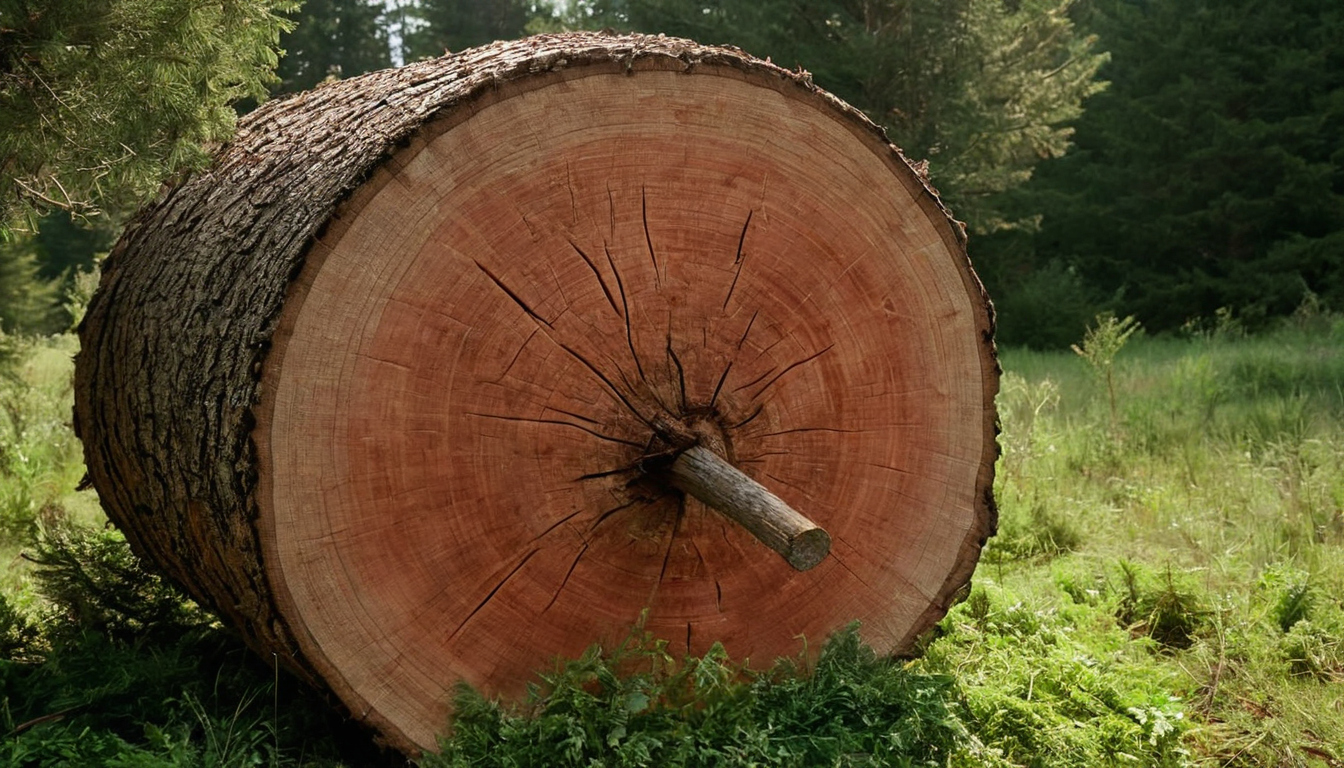
Remove a 1/2-inch thick disk from the base of a freshly harvested Christmas tree trunk before placing it in water. This clears the resin-sealed vascular tissue without shortening the tree unnecessarily. Cutting less leaves blocked xylem; cutting more wastes trunk length needed for stand stability. The National Christmas Tree Association recommends removing about a 1/2-inch thick disk of wood from the base of the trunk before putting the tree in the stand (NCTA care tips).
A thinner slice often fails because resin penetrates slightly past the visible cut line during harvest and transport. Shaving off a quarter inch might expose fresh grain, but the outermost rings frequently remain plugged with dried pitch. A thicker slice creates a different problem. Every extra inch removed lowers the canopy closer to the floor and reduces the hold the stand has to keep the tree upright. A tall Fraser fir or Douglas fir needs all the trunk length available to sit securely in the reservoir bolts.
How thick of a disk should you cut off a Christmas tree trunk.
The required thickness does not change significantly between common species sold at a typical christmas tree farm. Both Fraser fir and Douglas fir produce resin rapidly after harvest, so the half-inch rule applies across the lot. Think of the trunk base like a copper pipe capped with solder. Cut back past the sealed section until you see clean, open material. For a real tree destined for a water reservoir, that material sits exactly half an inch behind the original stump face.
Families choosing real trees for Christmas can use this checklist at the farm gate or retail lot to confirm the cut is correct:
-
Measure the disk. Confirm the removed slice is roughly half an inch thick before loading the tree into the vehicle.
-
Inspect the new face. Look for light-colored, moist wood across the entire circle. Dark, glossy patches indicate remaining sap blockage that requires another thin pass with the saw.
-
Check the bark edge. Leave the outer bark intact around the perimeter. Stripping bark removes the most active water-conducting layers just inside the cambium.
-
Verify the timing. Make this cut immediately before the trunk enters the water bucket or stand reservoir to prevent a second seal from forming.
Lot operators handling volume need to standardize this measurement across every tree leaving the yard. Inconsistent cuts lead to customer complaints about dry needles by mid-December, even when the rest of the care routine is perfect. With the thickness set, the next question is whether that fresh face stays submerged: should you cut a Christmas tree trunk straight or at an angle?
Should you cut a Christmas tree trunk straight or at an angle?
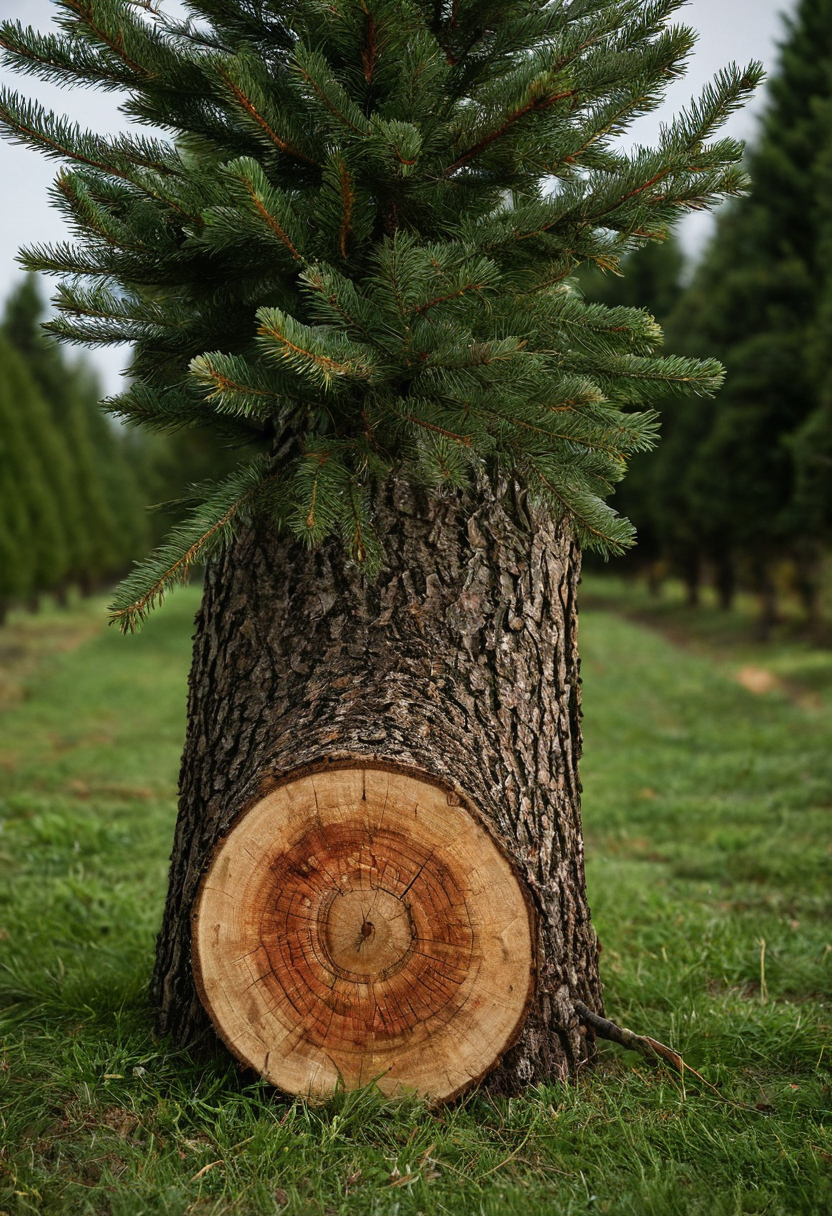
Make a straight crosscut perpendicular to the trunk axis. Angled cuts reduce the surface area seated inside standard reservoir stands and can expose the cut above the waterline when the reservoir drops slightly. A flat, level cut keeps maximum xylem submerged continuously for real trees for Christmas displays.
The National Christmas Tree Association states that the cut must be made perpendicular to the stem axis when preparing the fresh base, because cutting at an angle or into a v-shape makes it harder to hold the tree upright and reduces the water available to it (National Christmas Tree Association care tips). A bevel removes functional wood from one side of the stump while leaving the opposite edge high enough to sit above the water once the family drinks down the first quart. Sapwood tracheids exposed to air stop conducting within hours as resin hardens over the open cells.
Should you cut a Christmas tree trunk straight or at an angle.
Growers on the lot see customers tilt the saw to match a sloped floor or clear a low branch skirt. That tilt creates a wedge, forcing the stand spike off center and tilting the whole tree toward the living room wall. Correcting the lean means loosening bolts, shifting the trunk, and retightening. Each adjustment risks scraping bark away from the outer sapwood where uptake happens fastest.
A straight crosscut distributes the tree weight evenly across the reservoir floor. Set screws bite into uniform bark rather than sliding down a bevel. Stability matters because a rocking trunk pumps air into the xylem through microscopic gaps between the bark and the stand ring. Air entering those gaps accelerates embolism formation, blocking water columns before the reservoir ever runs dry.
Some families try to compensate for poor geometry by drilling into the base. The National Christmas Tree Association confirms that drilling a hole in the base of the trunk does not improve water uptake when preparing the tree for the stand. Holes bypass the capillary network of tracheids and create pockets where bacteria multiply faster. Plain tap water drawn through intact sapwood moves more efficiently than water forced through a bored channel. Water temperature also plays no role here; the temperature of the water used to fill the stand does not affect uptake rates.
Modern lot operators selling real trees for Christmas almost always pair inventory with reservoir stands. A straight cut works universally across current models. If a customer brings a vintage clamp stand to the farm, advise them to upgrade the hardware rather than carve the trunk. Preserving the full diameter of the sapwood ring gives the tree its best chance at holding needles through New Year.
Once the saw leaves a flat face, time becomes the next variable. How long after cutting can a Christmas tree go without water before that clean surface seals itself shut?
How long after cutting can a Christmas tree go without water?
Place the tree in water within two hours of making the fresh base cut. Beyond this window, resin begins hardening over exposed tracheids in species like Fraser fir and Douglas fir, blocking capillary action. If delayed longer, you must recut another half-inch disk to restore flow.
The National Christmas Tree Association notes that most tree species can go 6 to 8 hours after cutting the trunk and still take up water if placed in water as soon as possible (NCTA care tips). That outer limit assumes mild temperatures and shade. On a warm retail lot or inside a heated truck bed, pitch flows faster and seals the vascular tissue sooner. Treat two hours as your working deadline for real trees for Christmas rather than testing the absolute maximum.
Think of the open tracheids like the end of a garden hose left on hot pavement. The opening stays clear only while water keeps moving through it. Once the flow stops, sap fills the microscopic tubes and cures into a solid plug. Soaking cannot revive sealed wood. You have to saw off the blocked section entirely to reach live vessels again.
Avoid these common delays that shrink your safe window:
-
Open truck beds. Highway wind strips moisture from the cut face and accelerates resin hardening during the drive home from the tree farm.
-
Heated garages. Storing the tree indoors overnight before mounting exposes the stump to dry, warm air that speeds occlusion.
-
Direct sunlight on the lot. UV exposure and ambient heat soften pitch immediately after the saw passes through the bark.
-
Unwrapped transport. A canvas tarp over the tree slows evaporation and buys extra time for the exposed base.
With the clock running, the next move has to be deliberate. The sequence for preparing the saw, pre-filling the stand, and seating the trunk determines whether a christmas tree real tree drinks immediately or struggles all season.
Step-by-step: How to cut and mount a Christmas tree so it drinks immediately
Use a sharp pruning saw or bow saw to remove a flat, half-inch disk from the trunk base within two hours of harvest. Clear bark debris from the cut surface, center the trunk on the stand spike, tighten bolts evenly, and fill the reservoir with plain tap water before sap seals the vessels.
A fresh stump face exposes open tracheids ready to pull moisture upward. The mounting sequence matters as much as the saw stroke. A crooked seat lifts part of that fresh wood above the waterline, undoing the work you just did with the blade. Follow these steps in order to keep the plumbing open from the lot to your living room.
-
Select a sharp pruning saw or bow saw with medium teeth to shear the wood fibers cleanly rather than crushing them.
-
Prepare the stand reservoir by checking its capacity and positioning it where the tree will stay.
-
Remove a half-inch thick disk perpendicular to the stem axis to expose unsealed xylem tissue.
-
Brush away loose bark, sawdust, and pitch from the new cut surface without scraping the exposed wood.
-
Center the trunk hole directly over the stand spike so the weight distributes evenly across the base.
-
Tighten the securing bolts in alternating pairs, turning each one a few rotations at a time to prevent tilting the fresh cut.
-
Fill the stand reservoir with plain tap water immediately after the bolts hold firm.
Families picking out real trees for Christmas can complete this sequence in under five minutes at the tailgate. Lot operators coordinating volume cuts train crews to follow the same order for every trunk because consistency prevents callbacks about dry needles. When managing larger deliveries, reviewing wholesale Christmas tree order logistics helps ensure the crew has enough stands prepped and filled before the trucks arrive.
A sharp hand saw with 7 to 10 teeth per inch produces the cleanest face on species like Fraser fir and Douglas fir. Pruning saws with curved blades and aggressive tooth patterns bite quickly without requiring heavy downward pressure that splinters the bark. Bow saws work well for thicker trunks at retail lots because the tensioned blade stays rigid through the stroke. Extension forestry guides consistently recommend these manual tools over powered options for the final home cut because the slower stroke speed generates less friction heat and leaves the cell walls intact. Wipe the blade with a rag between trees if pitch builds up, since sticky resin drags the teeth and roughens the next surface.
The National Christmas Tree Association recommends stands provide 1 quart of water per inch of stem diameter. A tree with a four-inch trunk needs a reservoir holding at least one gallon. Check the stamped capacity on your stand or measure it with a pitcher before leaving the house. Many older metal stands hold far less than modern plastic models, forcing you to refill twice a day during peak uptake.
Position the empty stand exactly where the tree will stay for the season. Moving a filled reservoir spills water onto floors and delays the mount. Once the stand is set, pour in an inch or two of plain tap water. This shallow base catches the fresh cut immediately when you lower the trunk onto the spike. Top off the remaining volume after the bolts are tight. Avoid adding sugar, bleach, or commercial preservatives to the water. Plain tap water supports steady uptake without altering the osmotic balance inside the wood. The temperature of the water does not affect absorption rates, so there is no need to warm it up or chill it down before pouring.
A perfect mount and a full reservoir give the tree everything it needs to start drinking. Yet growers still field calls from families wondering why their real Christmas tree stops pulling water three days later. Hidden blockages might already be forming inside the trunk.
What stops a real Christmas tree from drawing water even after a fresh cut?
Air embolisms, bacterial growth in stagnant water, and insufficient reservoir capacity block water uptake even when the initial cut is correct. Keeping the water level above the cut line, using a stand sized for the trunk diameter, and avoiding additives that promote microbial films prevents these failures throughout the season.
Conifer xylem moves water under tension rather than pressure. Research published in the Journal of Plant Hydraulics explains that water transport in conifers operates at negative water potentials. When dehydration pushes those potentials past critical thresholds, the water columns inside the tracheids can snap. Air enters through microscopic pits between cells, forming an embolism that permanently blocks that pathway.
The tree tries to stop this process with built-in valves. Each pit contains a central thickening called a torus surrounded by a porous net known as a margo. As water potential gradients rise during drying, the torus presses against the pore to seal off the affected tracheid and keep air from spreading. At extreme stress, this mechanism fails and air-seeding begins. Forestry researchers detect these events by monitoring ultrasonic emissions: the signals start as pits close during early dehydration and disappear once intense drying has already destroyed the conductive tissue.
A sealed trunk feels different from a fresh one. Touch the cut surface. Hardened resin covers the wood like a glaze, and the sapwood appears dark and glossy rather than pale and damp. Bacterial films also cause blockages. Stagnant water breeds microbes within two to three days, creating a slimy layer across the exposed tracheids. Changing the water regularly and scrubbing the stand basin between seasons keeps those colonies from forming. Plain tap water works best; sugar, bleach, and commercial preservatives often feed the very bacteria that clog the stem.
If the cut face has glazed over, the only reliable fix is removing another half-inch disk to expose fresh wood. No liquid treatment reopens embolized cells once air has seeded through the pit membranes. These hidden blockages change what you need to watch for in the stand each morning. The daily habits come next.
FAQ: Timing, water levels, and keeping real trees for Christmas fresh
Families and lot buyers consistently ask about watering frequency, unattended holiday travel, and daily water volume. These answers draw on National Christmas Tree Association care guidelines and cooperative extension research to give usable numbers rather than general reminders to check the stand often.
-
How long can a Christmas tree go without being watered after a fresh cut? Most tree species can go 6 to 8 hours after cutting the trunk and still take up water if placed in water as soon as possible, according to the National Christmas Tree Association. Beyond that window, resin hardens over the tracheids and blocks flow.
-
How often does a real Christmas tree need to be watered once mounted in the stand? Check the reservoir every morning and evening. A freshly mounted tree drinks heavily during the first two days indoors, so never let the waterline drop below the base of the trunk.
The planning step that prevents most display failures happens before you load the car. Measure your stand reservoir with a pitcher of water at home. If it holds less than one quart per inch of your chosen trunk, buy a larger stand before visiting the farm.
FAQ: Timing, water levels, and keeping real trees for Christmas fresh.
For more on this topic, see other guides on this site.